jueves, 3 de marzo de 2011

Bicentenario del natalicio de D.F. Sarmiento

Buenos Aires, 14 de febrero de 2011

Queridos docentes, alumnos, padres y madres:

El martes 15 de febrero, celebramos el bicentenario del nacimiento de Sarmiento. Desde muchos ámbitos, en toda la extensión del país, le rendiremos homenaje pero me interesa señalar que Sarmiento y educación son sinónimos. Porque mientras su historia de político y gobernante pueden discutirse, el educador debe vivir en el respeto de todos.

En este aniversario hay dos aspectos excepcionales de Sarmiento que quiero señalar. Primero, como creador obsesivo de la escuela pública argentina. Como alguien dijo, en este ideal “acumuló la firmeza de su carácter, la integridad de su honradez y la pujanza de su inteligencia”. En segundo lugar, precisamente el tema de la honradez. No concibió gloria ni fortuna sino por los caminos de la rectitud e integridad.

Sin duda que las mejores propuestas pedagógicas y la más moderna tecnología deben incorporarse a nuestras escuelas. Pero enfrentamos un trabajo adicional: simplemente, recuperar la calidad de nuestra educación. En un proceso de deterioro sobre el que hay consenso y que no es responsabilidad de ningún gobierno pasado en particular, el nivel de nuestra educación pública ha ido cayendo. Aquel nivel de calidad –imaginado e inicialmente liderado por Sarmiento- fue durante cien años la más clara ventaja competitiva que tuvimos con respecto a muchos países en vías de desarrollo. Tenemos la obligación –entre todos- de restablecerlo.

En este bicentenario tan especial quiero entonces acercarme con entusiasmo y respeto a toda la comunidad educativa. Maestros, alumnos y familias que sostienen vivo el sueño primero de Sarmiento: solo la educación nos hará libres. Quiero sumarme e invitarlos a festejar y recordar, como un ejemplo, a aquel argentino excepcional que construyó con sus propias manos un mejor destino para todos.

Les mando un fuerte abrazo

Esteban Bullrich

Ministro de Educación de la Ciudad de Buenos Aires.

domingo, 30 de mayo de 2010

Himno a Sarmiento SANDRA MIHANOVICH


Himno a Sarmiento

Fue la lucha, tu vida y tu elemento;
la fatiga, tu descanso y calma;
la niñez, tu ilusión y tu contento,
la que al darle el saber le diste el alma.

Con la luz de tu ingenio iluminaste
la razón, en la noche de ignorancia.
Por ver grande a la Patria tu luchaste
con la espada, con la pluma y la palabra.


En su pecho, la niñez, de amor un templo
te ha levantado y en él sigues viviendo.
Y al latir, su corazón va repitiendo:
¡Honor y gratitud al gran Sarmiento!
¡Honor y gratitud, y gratitud!

¡Gloria y loor! ¡Honra sin par
para el grande entre los grandes,
Padre del aula, Sarmiento inmortal!
¡Gloria y loor! ¡Honra sin par!

Letra y música: Leopoldo Corretjer

viernes, 21 de mayo de 2010

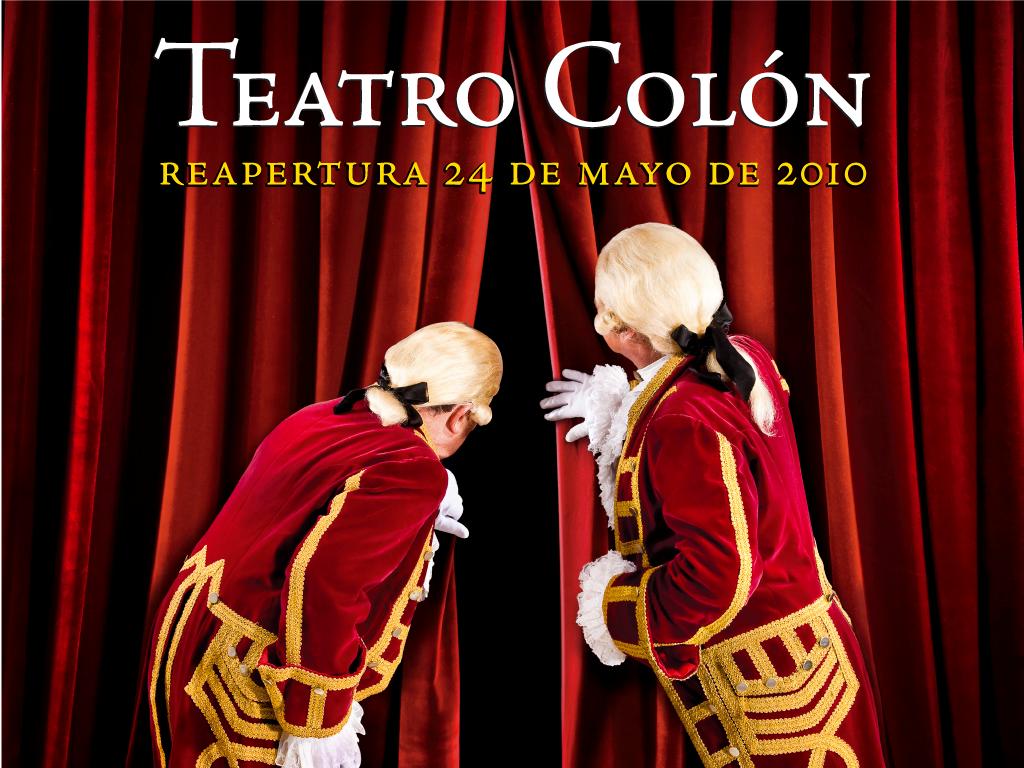
Colon Theatre Grand reopening!


The venerable Teatro Colon will reopen in May after three years of restoration works, with a star-studded opera calendar that includes Puccini’s La Bohème and Mozart’s Don Giovanni.
The theater opened on May 25, 1908, the Día de la patria (Motherland Day) in Argentina, with a performance of Verdi’s Aida. It quickly became a world-famous operatic venue rivaling La Scala and the Metropolitan Opera in attracting artists.

With excellent acoustics and modern stage areas, the theater’s interior design features a rich scarlet and gold decor. The cupola contains frescoes painted in 1966 by the renowned 20th century artist Raul Soldi during the renovation work.

sábado, 15 de mayo de 2010

Trailer de Crónicas de un siglo de vida

Este es un trailer de la película documental que fuimos a ver al Museo Roca.
Lo cuelgo aquí para que podamos seguir recordando a Tadeo Bortnowski y sus enseñanzas.


Wavin Flag

Learn the lyrics before the World Cup 2010 starts! When the activity is complete, we will listen to the song in class!

FIFA World Cup 2010 Official Anthem Lyrics
“Wavin’ Flag” is the third official single (eighth overall) by Somali-Canadian musician K’naan from his album Troubadour. The song was once performed acoustically live on Q TV by K’naan and his band to give viewers a preview of Troubadour before it was released. The song appears on the soundtrack for the video game NBA 2K10 and has been remixed & chosen as the official song of the 2010 FIFA World Cup titled “Wavin’ Flag (The Celebration Mix)”

k'naan - wavin' flag (Lyrics)

Zakumi - a Mascot with attitude


Describe the world cup mascot using the relevant structures

The Official Mascot, a leopard, has been designed and produced exclusively in the host country. The name is a composition of "ZA", standing for South Africa, and "kumi" translating into "10" in various languages across Africa. Inspired by his football idols, Zakumi has dyed his hair green as he felt it would be the perfect camouflage against the green of the football pitch.

Zakumi represents the people, geography and spirit of South Africa, personifying in essence the 2010 FIFA World Cup.


So what can we say about him?
Zakumi is a jolly, self-confident, adventurous, spontaneous, and actually quite shrewd little fellow. He loves to perform and always follows his instinct and intuition, yet sometimes has the tendency to exaggerate a bit. You will often find him fooling about and teasing people but not in a mean way. He is warm-hearted and caring, and wants to make as many friends as possible.
He loves to play football as it is a great way to connect with others and break down language barriers. He always carries his football around which he will use to invite people to play with him.
Zakumi loves football. At one time he decided to dye his hair green as he felt it would be the perfect camouflage against the green of the football pitch; a bit like his rosette spots are when hunting in the wilderness!

He has one striking weakness. With all his energy, he needs frequent rests. Occasionally, in-between performances on stage, he may suddenly fall asleep on the spot at the most random times! But rest assured, these are only short breaks that a leopard of his calibre needs to recharge his batteries.

viernes, 14 de mayo de 2010

¿Cuánto es?

The Harrods store in Knightbridge

Mohamed Al Fayed 'sells Harrods to Qatari royal family in £1.5bn deal'


miércoles, 7 de abril de 2010

Encuesta inglesa


Is Lionel Messi better than Maradona?


After his singled-handed demolition of Arsenal on Tuesday night, Messi has now scored 39 goals in this season, many of them ludicrously amazing. Has he now usurped Argentina's previous footballing deity?

The Guardian, London
Wednesday 7 April 2010

martes, 16 de marzo de 2010

Saint Patrick's Day


Saint Patrick’s Day is celebrated each year on March 17th. In Ireland, Saint Patrick’s Day is both a holy day and a national holiday. Saint Patrick is the patron saint of Ireland as he was the one who brought Christianity to the Irish.

According to legend, Saint Patrick used a shamrock to explain about God. The shamrock, which looks like clover, has three leaves on each stem. Saint Patrick told the people that the shamrock was like the idea of the Trinity – that in the one God there are three divine beings: the Father, the Son and the Holy Spirit. The shamrock was sacred to the Druids, so Saint Patrick’s use of it in explaining the trinity was very wise.

Although it began in Ireland, Saint Patrick’s Day is celebrated in countries around the world. People with Irish heritage remind themselves of the beautiful green countryside of Ireland by wearing green and taking part in the festivities.

Saint Patrick’s Day is usually celebrated with a parade. The one in Dublin, Ireland is known to some as the Irish Mardi Gras. But the one in New York City is actually one of the biggest. It lasts for hours. Two Irish wolfhounds, the mascots of the New York National Guard infantry regiment the “Fighting 69th”, always lead the parade. More than one hundred bands and a hundred thousand marchers follow the wolfhounds in the parade.

jueves, 17 de diciembre de 2009

Wishing you a very Happy New Year!


This is the year to S*H*I*N*E!
Here's my list for the new year :

Be the best you can be.

Be proud of who you are, and the company you keep.

Smile each day. Smile at people you don't know. Smile at yourself in the mirror.

Make time for your friends. Send them little cards, phone and say "I love You!"

Love what you do. Do what you love, and with all your passion.

Share what you have, with a generous hand.

Have Faith, and never stop believing!

miércoles, 18 de noviembre de 2009

El Muro de Berlín

Berlín celebró el 20° aniversario de la caída del muro, que por más de 28 años fue el símbolo de la Guerra Fría. "Hoy estamos juntos, unidos: usemos bien esta oportunidad de libertad para superar las barreras de nuestros tiempos. Sigamos adelante con la libertad", clamó la canciller alemana, Angela Merkel, en el acto final de una jornada llena de conmemoraciones. Antes, mientras sonaban las notas de "Wind of change", la canción del grupo alemán Scorpions que se convirtió en el símbolo de la caída del Muro, un grupo de niños cruzó la Puerta de Brandeburgo, emblema de la división entre Este y el Oeste. Segundos más tarde, también cruzaron la frontera que ya no está los jefes de Estado y representantes de la mayoría de las potencias mundiales. Visiblemente emocionados, recordaron aquella revolución pacífica que logró lo que en 1989 parecía imposible: ponerle punto final a la Guerra Fría.


La melodía de “Wind of Change” es el fondo musical que “prestó” Scorpions a la caída del muro.


La imagen resumió el clima de unidad que se vivió en la Fiesta de la Libertad, una celebración espectacular en la que descollaron el concierto de la Orquesta Estatal de Berlín, dirigida por el argentino israelí Daniel Barenboim, las actuaciones de Plácido Domingo, Bon Jovi y Paul van Dyck, y los fantásticos fuegos artificiales finales.


Wind of change

Scorpions fue el primer grupo occidental de heavy metal que logró tocar en la Unión Soviética. Su estancia al otro lado del “la Cortina de Hierro” inspiró a Klaus Meine en la composición de Wind of Change: “Era como si el mundo estuviera cambiando delante de tus propios ojos, así que decidimos volver a casa en septiembre del 89. Vivimos emociones fuertes. Lo que vimos en Leningrado en el 88 y en Moscú en el 89 era un fuerte sentimiento de esperanza en que el mundo podía cambiar para mejor”.

La canción no se lanzó al mercado sino varios meses luego de la caída del muro. Pero su lírica, pidiendo por paz y por cambios, inmediatamente tocó la fibra íntima de todos los que apreciaron el derrumbe de la Cortina de Hierro.


Take me to the magic of the moment

on a glory night

where the children of tomorrow dream away

in the wind of change


“La celebración del 20º aniversario de la caída del muro es también de las nuevas generaciones -explica el vocalista, Klaus Meine-. Es importante que sea así, porque creo que esta parte de nuestra historia es aún muy fresca y estoy seguro de que seguirá emocionando a las generaciones futuras. Porque fue un momento muy muy especial en la historia de Alemania y para la unidad europea. Y el cambio se hizo de forma pacífica, sin dispararse ni una sola bala”.


Wind of Change

lunes, 16 de noviembre de 2009

domingo, 25 de octubre de 2009

English people

Material para la Unidad 1


21 notable English people


Top row, left to right (línea superior, de izquierda a derecha)
Alfred the Great - the first King of the Anglo-Saxons.
Oliver Cromwell - English military and political leader.
William Shakespeare - English poet, playwright, and dramatist.
Michael Palin - English comedian, actor, writer and television presenter.
Georgiana Cavendish, Duchess of Devonshire - English duchess and socialite.
Walter Raleigh -
English writer, poet, soldier, courtier and explorer.
Sting -
English musician and actor.

Middle row, left to right (línea del medio, de izquierda a derecha)
Elizabeth I of England - Tudor Queen of England.
Bobby Moore - English footballer who captained the England national football team that won the 1966 World Cup.
Margaret Thatcher -
a politician born in England who served as Leader of the Conservative Party and Prime Minister of the United Kingdom.
David Beckham - English international footballer.
Harold Godwinson - English monarch.
Kate Winslet -
English actress.
Charles Dickens - English novelist

Bottom row, left to right (línea inferior, de izquierda a derecha)
Pope Adrian IV (born Nicholas Breakspear or Breakspeare) - the English Pope from 1154 to 1159.
Daniel Craig - English actor
Isaac Newton – English scientist.
George Harrison - English rock guitarist, singer-songwriter and film producer.
Jane Austen - English novelist.
Damon Albarn - English singer-songwriter and record producer.
George Stephenson - pioneering English civil engineer.